When a shopper reaches your checkout page and sees a red “Not secure” warning, they do not stop to weigh the risks — they hit the back button and buy from a competitor instead. Very few visitors push past that browser warning to finish a purchase, which is why a managed SSL certificate now matters more than most site owners realise.
Online, trust is binary — your site is either verified, secure and professionally presented, or it feels like an abandoned storefront in a sketchy neighborhood.
That tiny padlock displayed next to your URL serves as your site’s digital passport. However, keeping that validation active all year round has become increasingly complex. Between rapidly shrinking certificate validity periods and complex server configurations, manual maintenance is an operational liability.
That is precisely why deploying a managed SSL certificate has become the modern standard for smart site operators. Let us explore what managed SSL means, why automated encryption matters, and how to secure your domain seamlessly.
What is a managed SSL certificate?
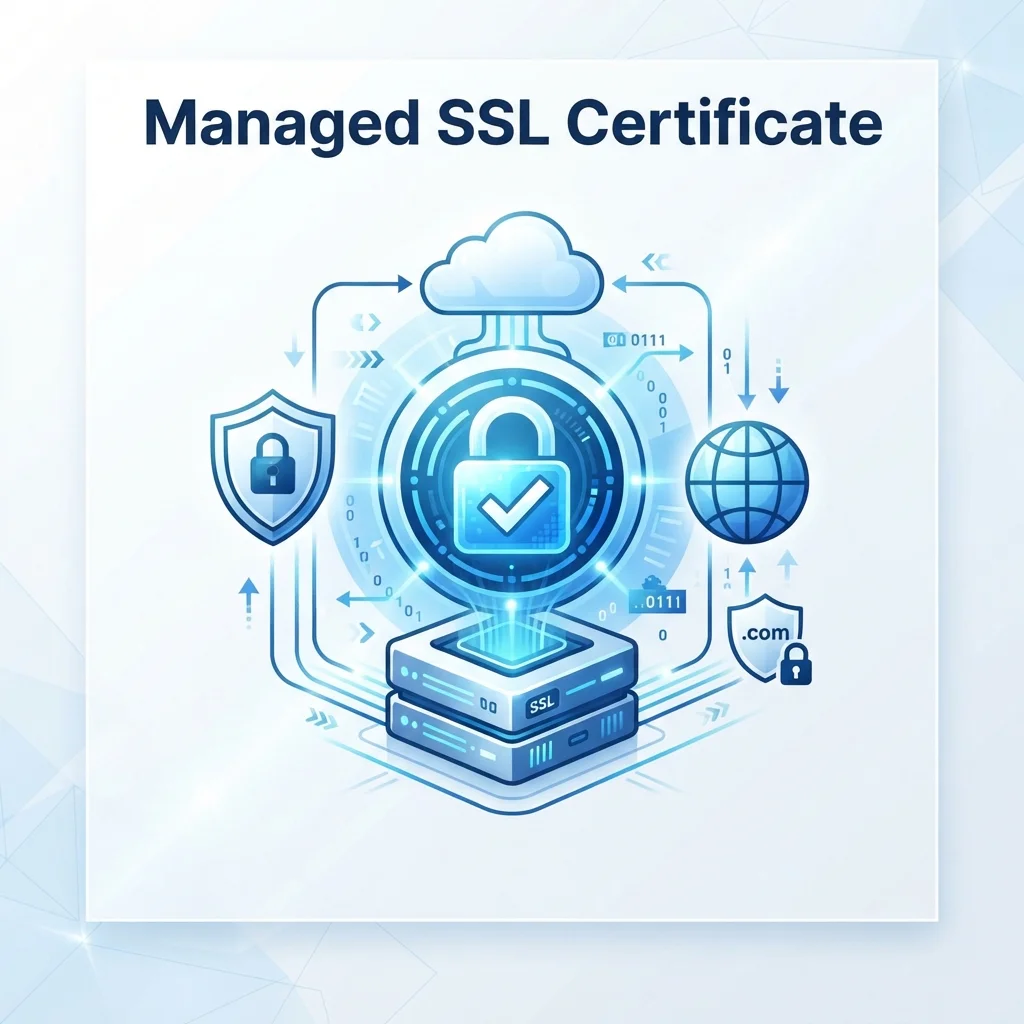
An SSL (Secure Sockets Layer) certificate—now technically standardized as TLS (Transport Layer Security)—encrypts the communication channel between a user’s web browser and your hosting server. This cryptographic handshake ensures that sensitive data, such as login credentials, credit card details, and contact forms, cannot be intercepted by malicious third parties.
When an SSL certificate is managed, your provider assumes complete operational responsibility for the certificate lifecycle. In a traditional, unmanaged setup, a system administrator must manually generate a Certificate Signing Request (CSR), pass domain validation challenges, download the issued files, install them on the web server, and configure intermediate certificates.
With a managed SSL certificate, the entire process is automated:
- Automated issuance and validation against your domain DNS records.
- Frictionless server-level installation without command-line tinkering.
- Continuous health monitoring to detect configuration drift or handshake errors.
- Automatic renewals executed long before your active certificate expires.
Instead of managing calendar reminders every few months, you rely on automated infrastructure to keep your site compliant and secure around the clock.
The growing danger of manual SSL management
Why has managed security shifted from a luxury to an absolute necessity? The answer comes down to industry-wide certificate lifespan reductions.
Not long ago, web owners could purchase five-year or two-year SSL certificates, install them once, and move on. Major browser vendors and standards bodies, guided by the W3C, pushed validity windows down to 398 days. Discussions across the security industry are now moving toward 90-day lifespans to minimize the risk of compromised cryptographic keys.
If you run multiple web properties, managing 90-day renewal cycles manually is a recipe for disaster. Missing a single renewal window triggers:
- Immediate browser blocking via full-page security interstitials.
- Severe dips in organic search visibility and search crawl efficiency.
- Instant abandonment from shoppers and lead inquiries.
- Broken API calls and webhook failures across connected web apps.
By utilizing dedicated managed SSL certificates, you remove the human error factor from the equation.
How SSL protection impacts your search visibility and conversions
Website security is not merely an IT checkbox; it directly governs your marketing performance and discoverability.
Search engines treat data integrity as a foundational user experience factor. Official documentation from Google Search Central confirms that HTTPS serves as a confirmed ranking signal. Search crawlers prioritize secure endpoints, while non-secure HTTP pages receive lower priority in indexation and visibility.
Beyond algorithmic rankings, encryption protects your brand equity. Web registries and digital infrastructure authorities like Verisign emphasize that cryptographic verification across the domain name system preserves user confidence and brand integrity across global networks.
When visitors see your secure domain paired with flawless HTTPS delivery, bounce rates drop and engagement increases across every landing page.
Understanding certificate validation levels
Before selecting an encryption solution, it helps to understand the three primary validation categories available for modern websites:
- Domain Validation (DV): The certificate authority verifies that you control the specific domain via DNS records or email validation. This is the fastest method, ideal for personal websites, content hubs, and small business blogs.
- Organization Validation (OV): The issuing authority vets your business registration documents in addition to domain ownership. This confirms to visitors that a legitimate, registered legal entity operates the site.
- Extended Validation (EV): The most rigorous validation process, requiring comprehensive corporate verification. EV certificates provide the highest level of institutional assurance, making them common among enterprise banks, healthcare platforms, and high-volume e-commerce stores.
| Validation Level | Vetting Scope | Issuance Speed | Warranty | Best Suited For |
|---|---|---|---|---|
| Domain Validation (DV) | Automated DNS TXT record or HTTP challenge | Under 5 minutes | $10,000 | Blogs, personal portfolios, lead landing pages |
| Organization Validation (OV) | Domain ownership + registered business registry vetting | 1–3 business days | $100,000+ | Corporate B2B portals, client extranets, SaaS apps |
| Extended Validation (EV) | Comprehensive legal, physical, and operational verification | 3–5 business days | $1,000,000+ | Financial services, healthcare, high-volume e-commerce |
| Wildcard SSL (*.domain.com) | Covers apex domain + all first-level subdomains | Matches DV/OV tier | Tier-dependent | Multi-tenant SaaS, cloud platforms, member subdomains |
Regardless of which validation level you require, managing installation and renewal through an automated workflow ensures your certificates never lapse.
Does your domain extension change SSL requirements?
A common question among web owners launching new projects is whether their choice of Top-Level Domain (TLD) impacts encryption requirements.
Whether your site operates on a legacy `.com`, a specialized `.org`, or modern extensions like `.io` and `.ai`, the browser-level encryption standards remain identical. However, user expectations vary by domain type:
- .com Domains: As the global benchmark for commercial authority, a `.com` lacking a valid SSL certificate looks jarring and suspicious to consumers.
- .io and .ai Domains: Heavily favored by developers, startups, and tech founders. This demographic recognizes unencrypted connections instantly, making active SSL non-negotiable from day one.
- New generic TLDs (.store, .tech, .app): Some modern extensions (such as `.app` and `.dev`) are included on HSTS preload lists by default, meaning web browsers will refuse to load them entirely without a valid HTTPS configuration.
Before establishing your digital footprint, you can verify your domain records and check naming availability using a comprehensive WHOIS lookup to protect your naming rights across multiple extensions.
Under the Hood: TLS 1.3 Handshake and Modern Cipher Suites
Modern SSL/TLS does much more than toggle a padlock in the browser URL bar. The current standard, TLS 1.3 (ratified by the IETF in RFC 8446), re-engineered the cryptographic handshake to reduce latency from two network round-trips (2-RTT) down to just one round-trip (1-RTT), while introducing zero-round-trip time (0-RTT) resumption for returning visitors.
Unlike legacy TLS versions, TLS 1.3 eliminates obsolete, vulnerable primitives such as SHA-1, RC4, MD5, and static RSA key exchange. Every connection enforces Perfect Forward Secrecy (PFS) using Ephemeral Elliptic Curve Diffie-Hellman (ECDHE). Even if a server private key were compromised in the future, previously recorded sessions cannot be retroactively decrypted.
Hardened Server Configuration (Nginx Best Practice)
To ensure high performance and an A+ security rating on SSL Labs, configure your origin web server with the following production-grade TLS parameters, OCSP stapling, and HTTP Strict Transport Security (HSTS):
# Enforce modern protocols (TLS 1.2 and TLS 1.3 only)
ssl_protocols TLSv1.2 TLSv1.3;
ssl_ciphers 'ECDHE-ECDSA-AES128-GCM-SHA256:ECDHE-RSA-AES128-GCM-SHA256:ECDHE-ECDSA-AES256-GCM-SHA384:ECDHE-RSA-AES256-GCM-SHA384';
ssl_prefer_server_ciphers off;

# Enable OCSP Stapling to accelerate TLS handshake
ssl_stapling on;
ssl_stapling_verify on;
resolver 1.1.1.1 8.8.8.8 valid=300s;
resolver_timeout 5s;

# Enforce HSTS (1 year with subdomains and preload eligibility)
add_header Strict-Transport-Security "max-age=31536000; includeSubDomains; preload" always;
add_header X-Content-Type-Options "nosniff" always;
Critical mistakes to avoid when securing your website
Even experienced site owners can stumble during security upgrades. To maintain an uninterrupted connection, keep these technical pitfalls in mind:
- Mixed Content Errors: Installing an SSL certificate does not automatically update hardcoded internal media URLs. If your page loads images, scripts, or fonts via `http://`, browsers will flag the page as partially insecure.
- Overlooking Subdomains: Securing `yourdomain.com` does not automatically secure `app.yourdomain.com` or `shop.yourdomain.com`. Ensure your configuration includes wildcard protection or multi-domain coverage.
- Mismatched DNS Records: Automated SSL validation depends on clean DNS routing. As outlined by the internet governance body ICANN, proper coordination between registrars, name servers, and hosts is vital for uninterrupted domain verification.
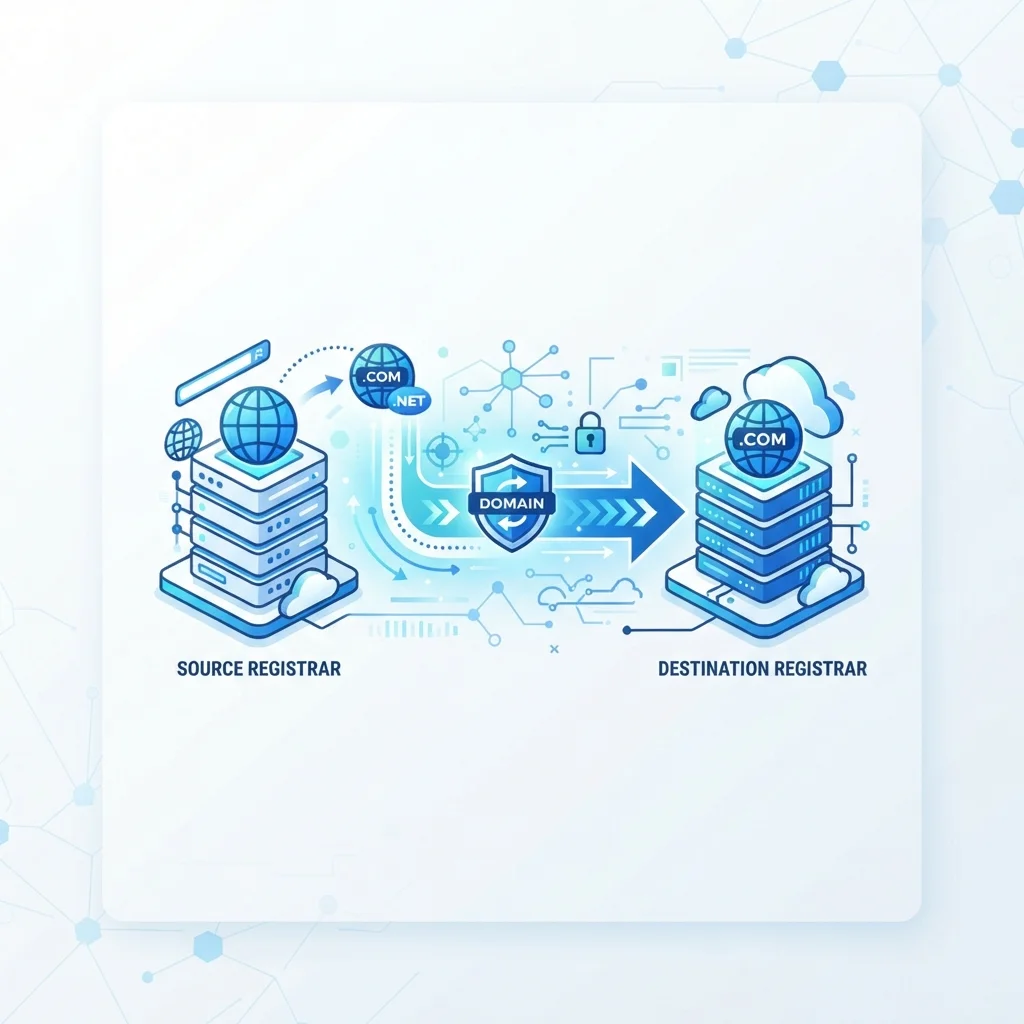
- Neglecting Domain Portfolios: If you manage multiple web properties across different providers, consolidating them via domain transfers helps centralize certificate lifecycles into a single, manageable interface.
How to get started with seamless site security
Digital security does not need to be an overwhelming headache. You do not need to spend hours inside a server terminal generating private keys to provide a safe browsing experience for your audience.
By combining your domain registration with fully managed security automation, you ensure your web assets remain protected, compliant, and ready to convert visitors.
If you are planning your next online project or looking to upgrade your existing site, run your brand ideas through our fast domain search tool today. Lock down your digital brand, activate automated security, and focus on growing your business with total peace of mind.
Ready to secure your site? Use our AI domain search tool to check availability, then activate your managed SSL certificate for complete peace of mind.
Helpful resources
Here are a few related pages on Deals2Domains that pair well with this topic: