
Acquiring high-value digital real estate demands rigorous administrative safeguards and cryptographic verification, making safe domain transactions the cornerstone of brand protection. A single procedural oversight during an acquisition can instantly expose your enterprise to DNS hijacking, data interception, and broken certificate chains. Whether you are executing a seamless corporate domain transfer or securing an expiring web asset via domain backorder, you must bridge legal due diligence with low-level systems engineering.
# Engineering Safe Domain Transactions: Protocols and Governance
Safe domain transactions rely on verified operational protocols governed by escrow mechanisms, administrative title audits, and registry handshakes. On the commercial front, you should use neutral third-party escrow services while verifying title integrity via the ICANN Lookup registry directory. This audit ensures the seller holds unencumbered legal title free of trademark liens, administrative disputes, or corporate restructuring holds before capital changes hands.
Under the hood, every transaction follows the Extensible Provisioning Protocol (EPP) specified in RFC 5731 and maintained by IANA. Ownership cannot transfer until the losing registrar updates the domain status from clientTransferProhibited to an active state and issues a cryptographically generated Auth-Info code. During this transition, your authoritative Name Servers must execute continuous resolution of Start of Authority (SOA) serials while preserving public key infrastructure (PKI) integrity across the DNS chain.
# Business Risk and Technical Transfer Architecture
Unsecured domain handoffs directly threaten corporate valuation and customer trust. If an attacker intercepts your traffic through unauthorized nameserver modifications, your customers face weaponized phishing portals and malicious credential harvesters. Unplanned resolution blackouts also trigger immediate crawling penalties across search engine monitors, destroying months of organic brand equity in hours.
From a systems perspective, the primary operational hazards involve recursive DNS caching latency, Time-to-Live (TTL) expiration, and TLS handshake failures. When you switch nameserver delegations without pre-staged zone records, recursive resolvers globally enter a split-brain state that bounces user queries unpredictably. If your engineering team fails to provision an active managed SSL certificate covering both apex and subdomains prior to the cutover, visitors encounter immediate browser termination via ERR_CERT_COMMON_NAME_INVALID errors.
# Pre-Transfer DNS and Protocol Configuration Matrix
Executing safe domain transactions without downtime requires technical precision at the zone file level. You must replicate, stage, and lower record TTLs across all production services before requesting authorization codes from the losing registrar.
| Record Type | Target Syntax / Standard | Operational Role | Migration Action & Timing |
|---|---|---|---|
| SOA | mname rname serial (refresh retry expire minimum) |
Governs zone replication across secondary servers | Increment serial (YYYYMMDDnn); drop minimum TTL to 300s 48h prior. |
| NS | ns1.example.com., ns2.example.com. |
Identifies authoritative nameservers | Pre-configure matching records on target DNS servers before registrar transfer. |
| A / AAAA | 192.0.2.1 / 2001:db8::1 |
Directs IPv4/IPv6 host resolution | Reduce TTL to 300s; keep origin web servers operational during cutover. |
| MX | 10 mail.example.com. (Priority + FQDN) |
Directs Simple Mail Transfer Protocol (SMTP, Port 25) | Mirror existing priority matrices precisely to prevent dropped messages. |
| TXT (SPF) | v=spf1 include:_spf.example.com -all |
Authorizes outbound mail transfer agents | Re-verify permitted IP ranges across target email gateways to prevent spoofing. |
| DS | Key Tag, Algorithm, Digest Type, Digest |
Anchors DNSSEC chain of trust to parent registry | Crucial: Remove DS records from registrar 24h prior to nameserver changes. |
Before initiating your transfer, run targeted terminal diagnostics to evaluate your domain’s live cryptographic posture. These commands verify your authoritative delegation status, validate parent-level DS records, and inspect TLS handshakes on the new host:
# Verify authoritative delegation and SOA serial consistency
dig +trace +nodnssec example.com SOA

# Check for lingering DNSSEC Delegation Signer (DS) records at the TLD level
dig DS example.com +short

# Validate TLS certificate chain validity and cipher support on destination host
openssl s_client -connect target-ip-address:443 -servername example.com -tls1_3
# Protocol Mechanics: EPP Transitions and DNSSEC Chain of Trust
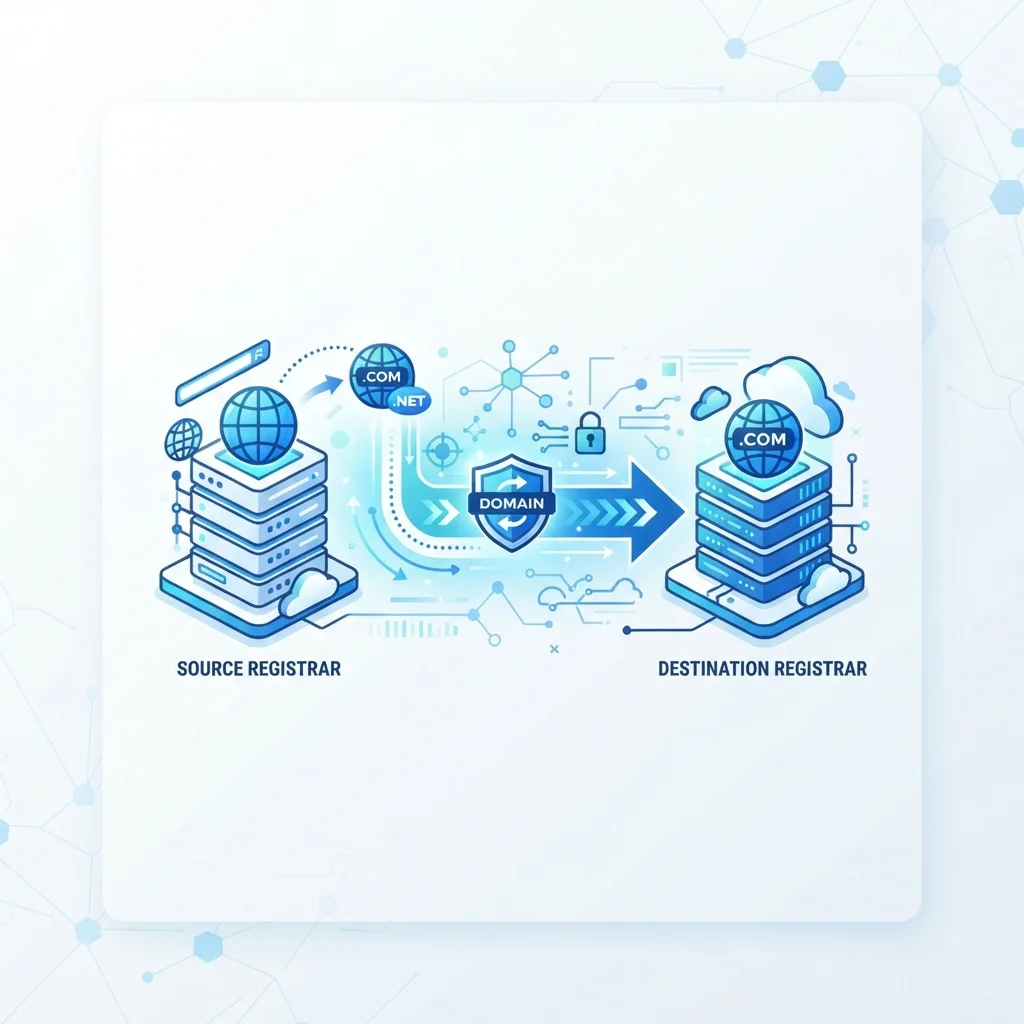
Generic Top-Level Domain (gTLD) registries like Verisign enforce specific protocol timelines to protect domain registrants from unauthorized transfers. When your receiving registrar submits an EPP op="request" command with the Auth-Info code, the registry places the domain into a pendingTransfer state for up to five full days. This holding window grants the losing administrative contact an essential buffer to inspect the request and trigger op="reject" if unauthorized activity occurs.
[Target Registrar] --( EPP <transfer> request + Auth-Info )--> [TLD Registry]
                                                                     |
                                                           (Sets pendingTransfer)
                                                                     |
[Losing Registrar] <-- ( Mandatory 5-Day Dispute Window ) -----------+
Orphaned DNSSEC records represent one of the most severe technical traps during safe domain transactions. If you update nameservers without deleting the parent zone’s Delegation Signer (DS) record, validating resolvers worldwide flag the responses from your new nameservers as forged and return global SERVFAIL errors. You must delete the DS records 24 to 48 hours prior to nameserver changes, allow the TTL to fully expire, and only re-sign your zone once the migration finishes.
# Troubleshooting Critical Transfer and Routing Failures
Edge cases can emerge during complex domain cutovers, requiring rapid triage to keep production traffic online. Use this diagnostic checklist to isolate protocol mismatches before they disrupt operational infrastructure:
1. EPP Status Code Locks: If your transfer request returns an Object status prohibits operation error, inspect WHOIS outputs for clientTransferProhibited or serverTransferProhibited flags. The current owner must log into their registrar console to remove transfer locks and verify that the 60-day post-registration lock window has elapsed. 2. Broken Enterprise Mail Routing: If inbound email bounces post-migration, audit your MX priority records for syntax typos or mismatched fully qualified domain names (FQDNs). Restore reliable message delivery by configuring your MX targets alongside business email validation standards like SPF, DKIM (RFC 6376), and strict DMARC policies. 3. Circular Glue Record Dependencies: When you configure custom nameservers on the acquired domain (such as ns1.example.com), remember to register matching A and AAAA glue records directly at the registry. Omitting these glue records prevents recursive resolvers from locating the nameserver’s IP address, taking the entire domain offline.
# Securing Your Domain Asset Operations
Executing safe domain transactions requires absolute coordination between administrative escrow controls and low-level protocol engineering. When you audit EPP locks, stage DNS zone records in advance, and sanitize your DNSSEC chain of trust, you insulate your digital footprint against hijackers and costly downtime. Protect your critical assets and streamline your DNS operations by deploying comprehensive website security solutions with deals2domains.com today.
Ready to find the perfect domain? Use our AI domain search tool to check availability and get instant suggestions.