
Your company’s online revenue chain is only as secure as the DNS infrastructure quietly routing its traffic. When malicious actors compromise authoritative nameservers or exploit registrar credentials, customer traffic diverts instantly to fraudulent clones without triggering traditional endpoint alarms. Deploying enterprise-grade domain security services shields mission-critical routing from hijacking, maintains cryptographic transport integrity, and protects brand equity across global networks.
Core Architecture of Domain Security Services
Modern domain protection operates as a distributed defense model across the registrar, authoritative nameservers, and edge routing layers. Domain security services coordinate these distinct tiers to enforce identity validation, cryptographic verification, and operational access controls. For an executive, this safeguards checkout pipelines and corporate reputation; for an infrastructure engineer, it enforces strict governance over zone records and transport layer protocols.
Under the hood, these defenses rely on foundational internet protocols maintained by ICANN and IANA. At the routing level, DNSSEC (Domain Name System Security Extensions, RFC 4033) introduces asymmetric cryptography into standard DNS lookups.
Authoritative zone operators sign resource record sets (RRsets) with a Zone Signing Key (ZSK), while a Key Signing Key (KSK) signs the ZSK. That signature chain establishes the parent-child delegation signer (DS) hash held in the top-level domain (TLD) registry.
Alongside routing validation, email identity mechanisms enforce non-repudiation across public mail exchanges. Protocols including SPF (RFC 7208), DKIM (RFC 6376), and DMARC (RFC 7489) work in concert to eliminate domain impersonation and spoofing. Security frameworks published by CISA emphasize that unauthenticated domain records remain the primary attack vector for modern corporate credential harvesting.
Threat Vectors: Assessing Business Risk and Technical Exposure
Unprotected domains introduce acute financial vulnerabilities through cache poisoning, registry impersonation, and unauthorized transfers. A single compromised registrar account enables attackers to modify nameserver (NS) records, redirecting payment traffic to phishing infrastructure while legitimate SSL certificates are fraudulently reissued. The resulting business downtime destroys client confidence, disrupts merchant processing, and invites severe regulatory scrutiny.
From a systems engineering perspective, open resolver vulnerabilities and missing cryptographic records expose recursive resolvers to man-in-the-middle (MITM) attacks. Without modern Website Security protocols enforcing DNS validation, attackers inject forged records into recursive DNS caches over unencrypted UDP port 53. Once a resolver accepts poisoned records, entire subnets are redirected to rogue endpoints without client-side browser warnings.
[Client Resolver] --(Forged UDP/53 Response)--> [Poisoned Cache]
        |
        +--> User routed to Malicious IP (Payment Phishing)
Hardening Configuration Matrix and Implementation Standards
Deploying comprehensive domain security services requires configuring explicit DNS resource records and registrar lock policies. The matrix below defines the baseline cryptographic and authentication records required to harden public web infrastructure.
| Record / Setting | Host / Scope | Recommended Syntax / Configuration | RFC / Standard | Operational Objective |
|---|---|---|---|---|
| CAA | @ |
0 issue "letsencrypt.org"; 0 iodef "mailto:[email protected]" |
RFC 8659 | Restricts authorized Certificate Authorities permitted to issue domain certificates. |
| DS | @ |
2371 13 2 4A3B... [SHA-256 Digest] |
RFC 7344 | Publishes the cryptographic delegation signer digest to establish the DNSSEC chain of trust. |
| TXT (SPF) | @ |
v=spf1 ip4:198.51.100.0/24 include:_spf.google.com -all |
RFC 7208 | Explicitly defines authorized sending IPs and enforces a hard fail (-all) on unauthorized senders. |
| TXT (DMARC) | _dmarc |
v=DMARC1; p=reject; pct=100; rua=mailto:[email protected] |
RFC 7489 | Directs receiving mail transfer agents (MTAs) to reject unauthenticated mail and transmit telemetry. |
| Registry Lock | Registrar | clientTransferProhibited, serverUpdateProhibited |
EPP Standards | Prevents automated or unauthorized domain transfers, deletions, and nameserver alterations. |
System administrators can verify DNSSEC cryptographic signatures directly from the terminal using the dig diagnostic tool:
dig +dnssec +multiline example.com AInspect the returned query data to confirm that an RRSIG record accompanies the A record response. This validation confirms that your cryptographic signatures correlate directly with the published KSK digest in the parent registry.
Registry-Level Controls and Edge Cryptography
True defense-in-depth demands synchronization between registry governance and edge-level encryption. When you initially Register a Domain, registrar-level settings such as multi-factor authentication (MFA) and Extensible Provisioning Protocol (EPP) status flags serve as your primary barrier against unauthorized account takeovers.
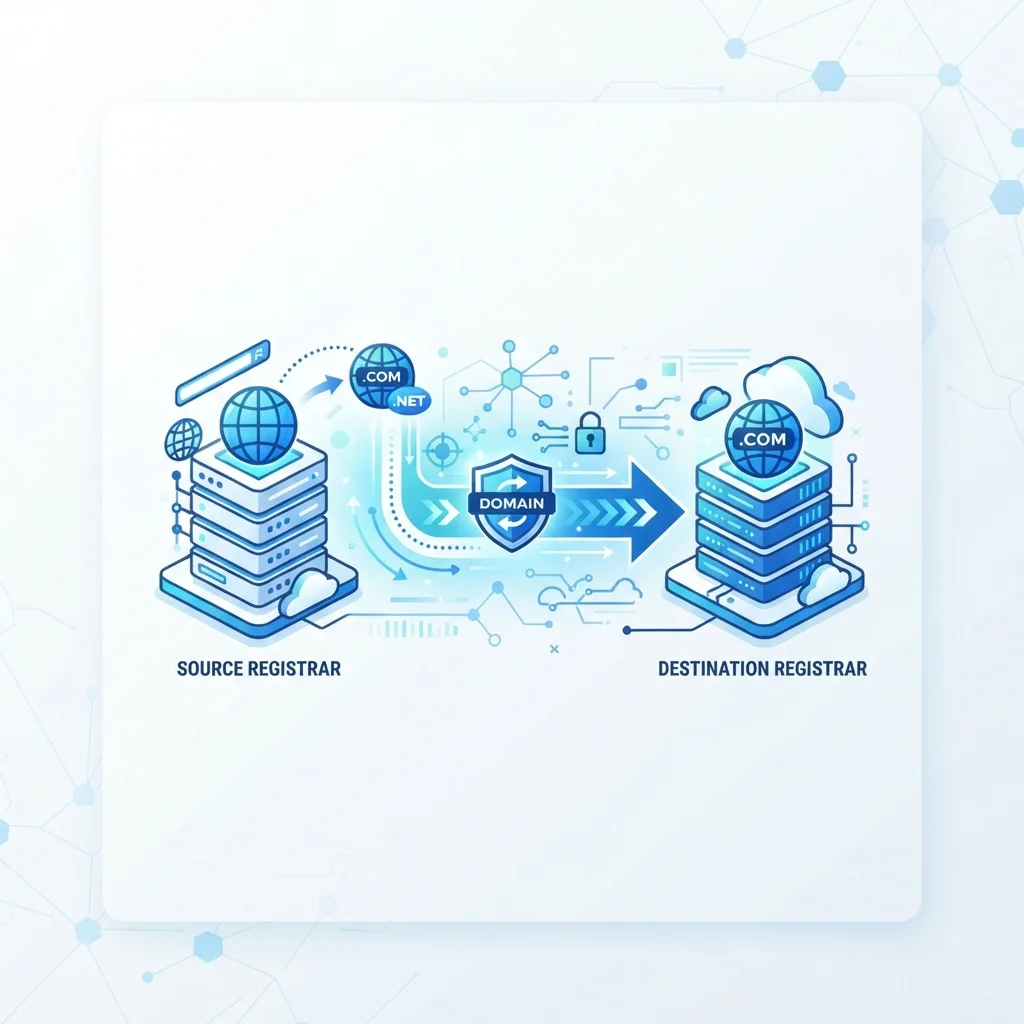
When you manage domain portfolios or execute a Domain Transfer, locking authorization codes prevents illicit ownership migrations. You can also inspect public registration records using ICANN Lookup (WHOIS) to verify that privacy proxies shield administrator contacts without masking authoritative registrar locks.
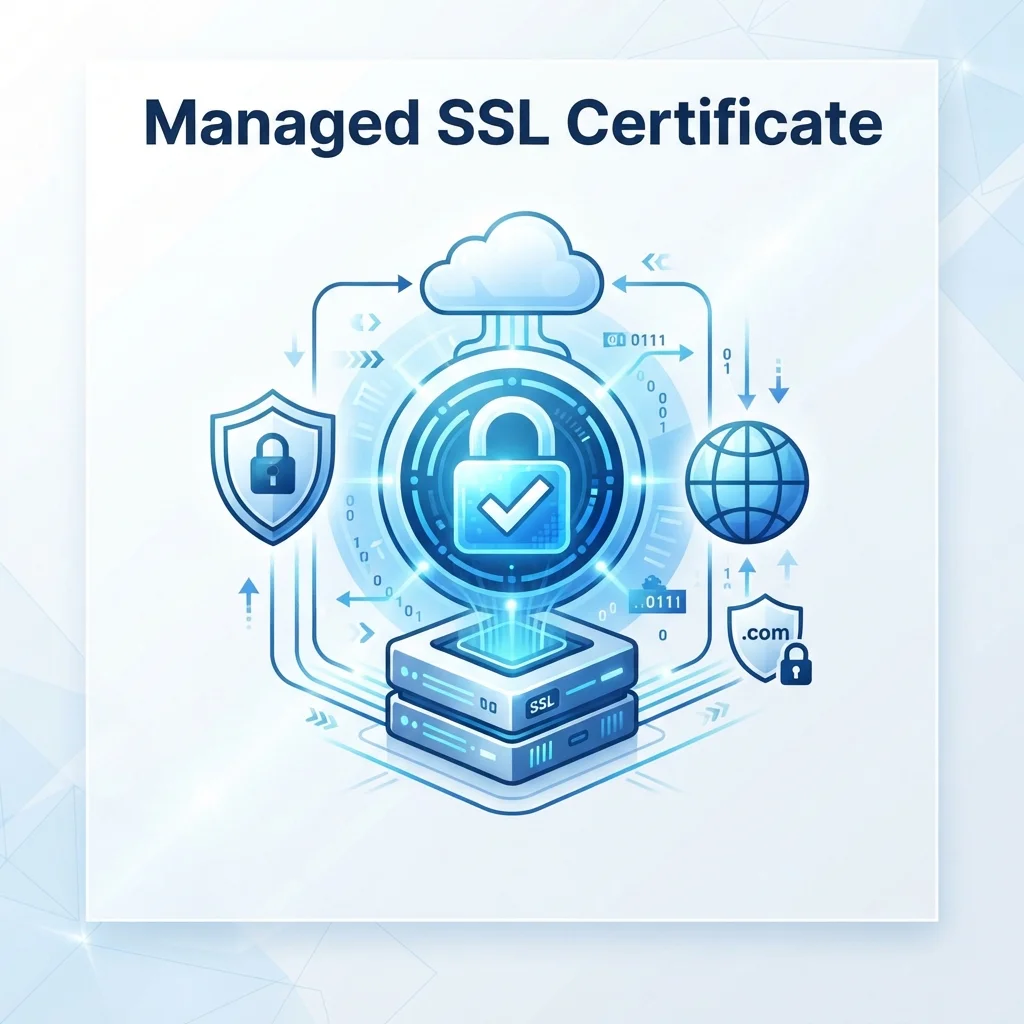
At the transport edge, DNS hardening must pair with modern cryptographic suites. Standardizing on TLS 1.3 (RFC 8446) eliminates legacy cipher suites and enforces forward secrecy using ephemeral Diffie-Hellman keys over elliptic curves (ECDHE). You can deploy trusted SSL Certificates alongside HTTP Strict Transport Security (HSTS) response headers to enforce ironclad encryption:
Strict-Transport-Security: max-age=63072000; includeSubDomains; preloadThis response header instructs user agents to route all interactions strictly over TCP port 443. Consequently, your web perimeter eliminates plaintext HTTP downgrades and cookie interception vectors.
Common Operational Pitfalls and Triage
Even resilient architectures encounter disruption if security controls are configured without strict operational sequencing. You can avoid catastrophic downtime during hardening cycles by resolving these frequent missteps:
- Premature DMARC enforcement: Publishing a
p=rejectpolicy immediately often blocks valid third-party SaaS senders such as transactional billing engines. Begin withp=none, evaluate aggregateruareports for 30 days to catalog legitimate senders, advance top=quarantine, and finally enforcep=reject. - DNSSEC DS mismatches during migration: Transferring DNS hosting while maintaining active DS records at the registrar triggers global
SERVFAILerrors. Always remove the parent DS record at the registrar prior to changing authoritative nameservers, allowing TTL values to expire before re-signing the new zone. - Overly long DNS TTL settings prior to cutover: High Time-to-Live (TTL) values cache stale records across upstream recursive resolvers for days. Lower TTL values to 300 seconds at least 48 hours before modifying routing or cryptographic keys to facilitate rapid rollbacks if resolution anomalies occur.
- Certificate expiration via missing ACME automation: Relying on manual TLS certificate renewals creates catastrophic production outages across critical revenue channels. Deploy automated ACME (RFC 8555) renewal clients or utilize Managed SSL workflows integrated with proactive alerting to monitor certificate lifecycles 30 days ahead of expiration.
Upgrading Your Infrastructure Defense
Maintaining an impenetrable online presence requires automated policy enforcement, robust DNS hosting, and proactive registry monitoring. When you prioritize comprehensive domain security services, you safeguard critical checkout paths, protect confidential client transactions, and maintain absolute authority over your digital routing perimeter.
Fortify your edge architecture and automate continuous SSL and TLS certificate management with Premium Website Security to defend your digital brand against emerging threats today.
Ready to find the perfect domain? Our AI domain search tool checks availability and suggests strong names in seconds.